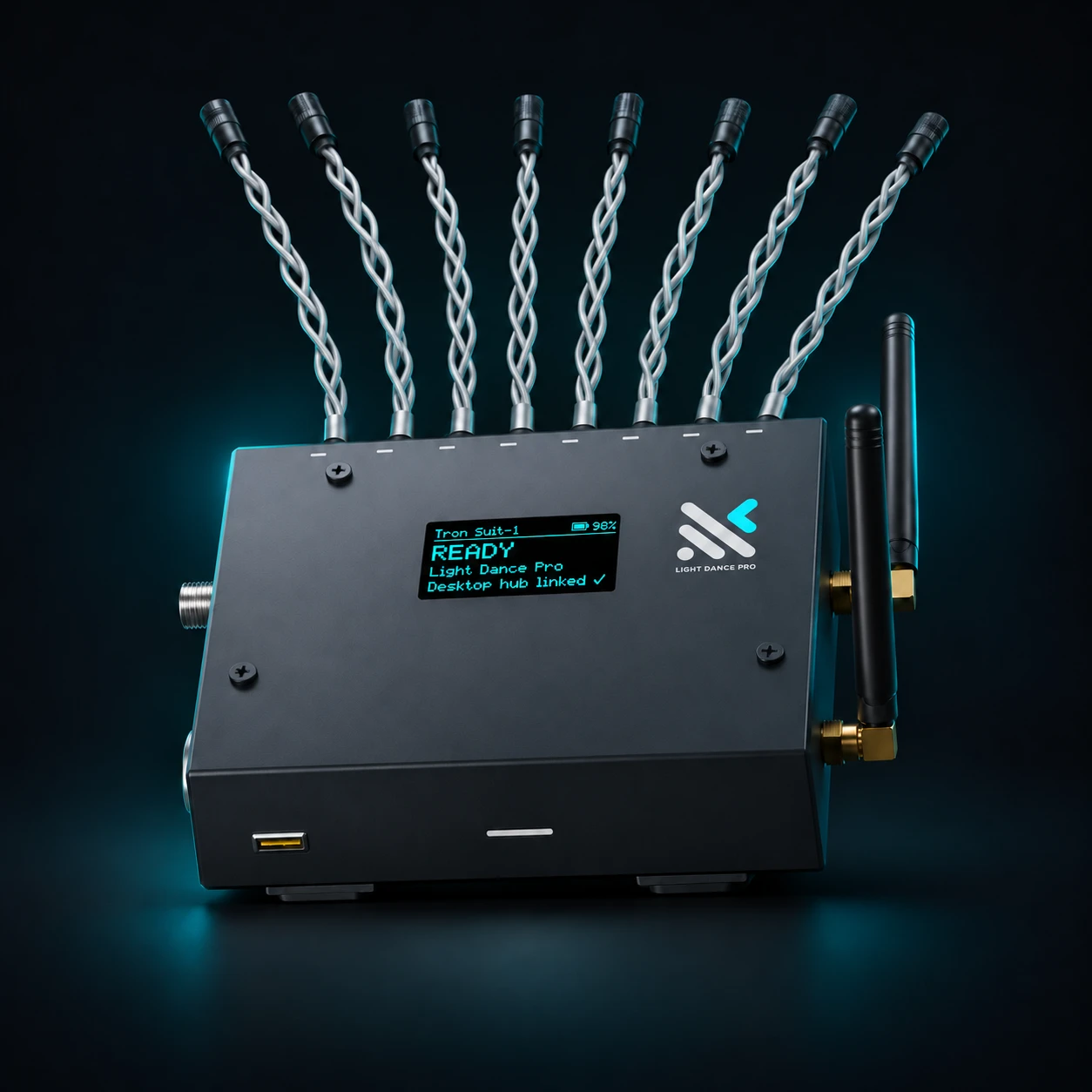
LDP LED Node
Wireless LED
control.
In testing and trial production.
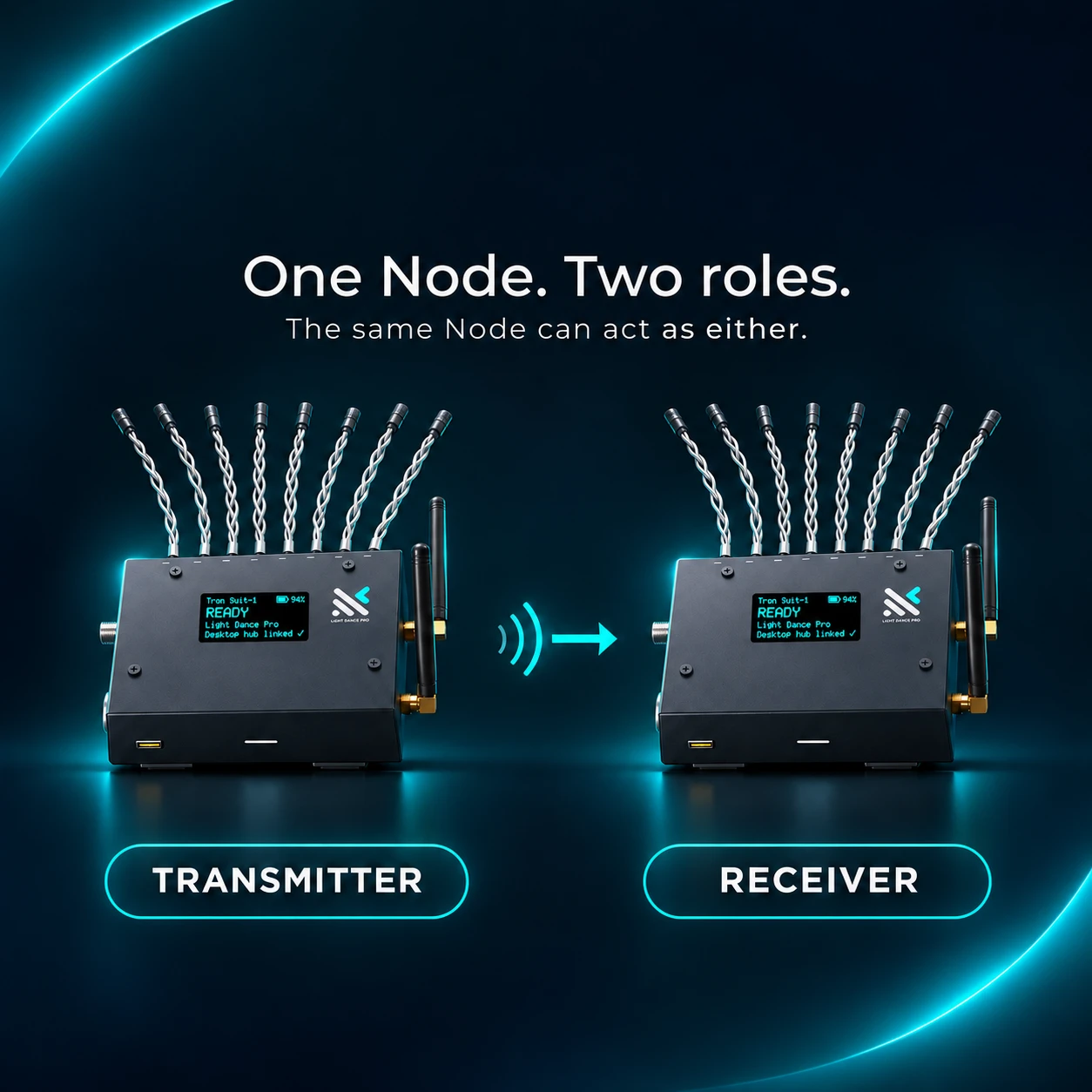
Transmitter or receiver
Any LED Node can do either job. Connect one to your computer by USB to send wireless playback commands. Each receiver plays the show from its microSD card and controls its connected LEDs.
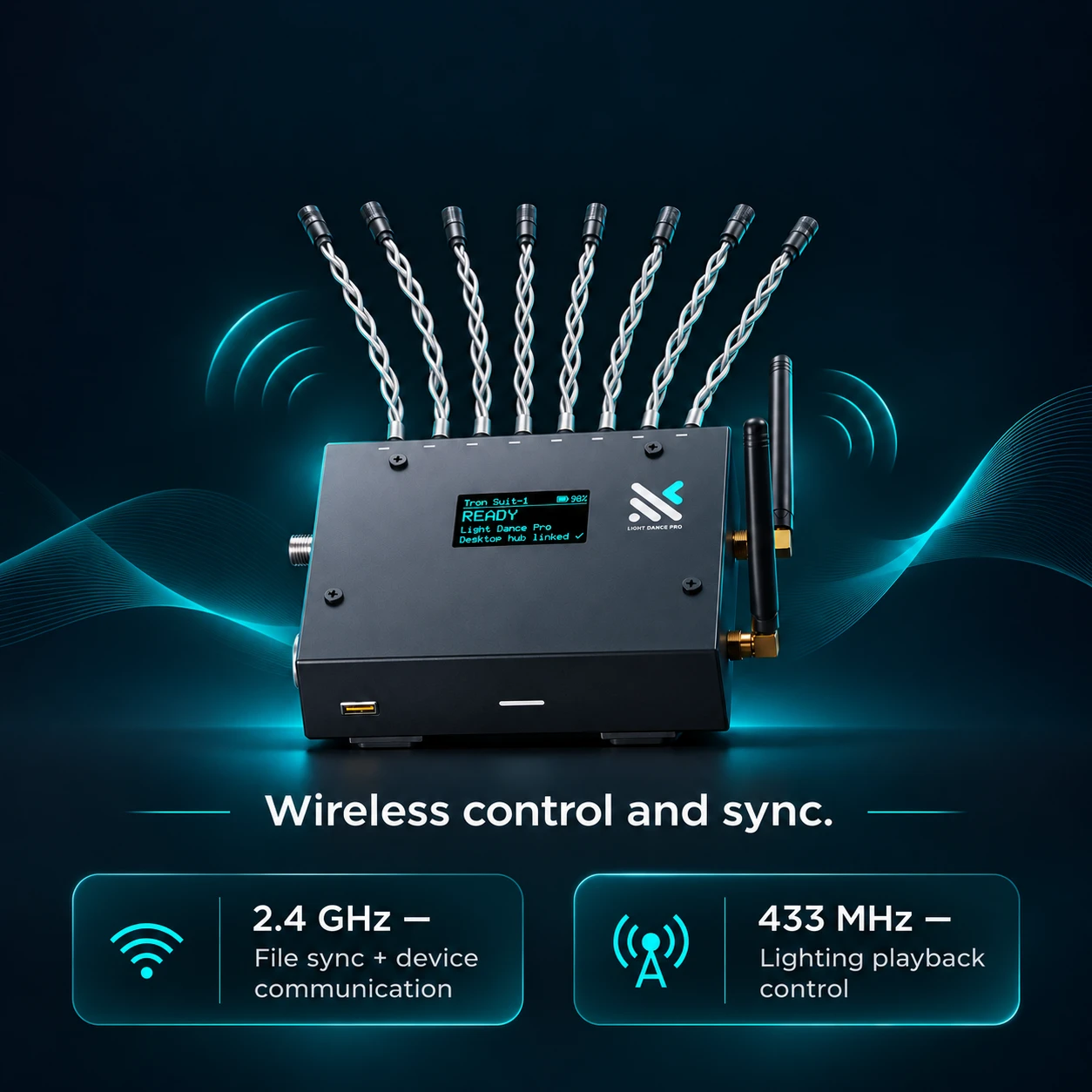
Wireless sync and playback control
The Node uses 2.4 GHz to sync show files and communicate with other devices. It uses 433 MHz to send and receive lighting playback commands.
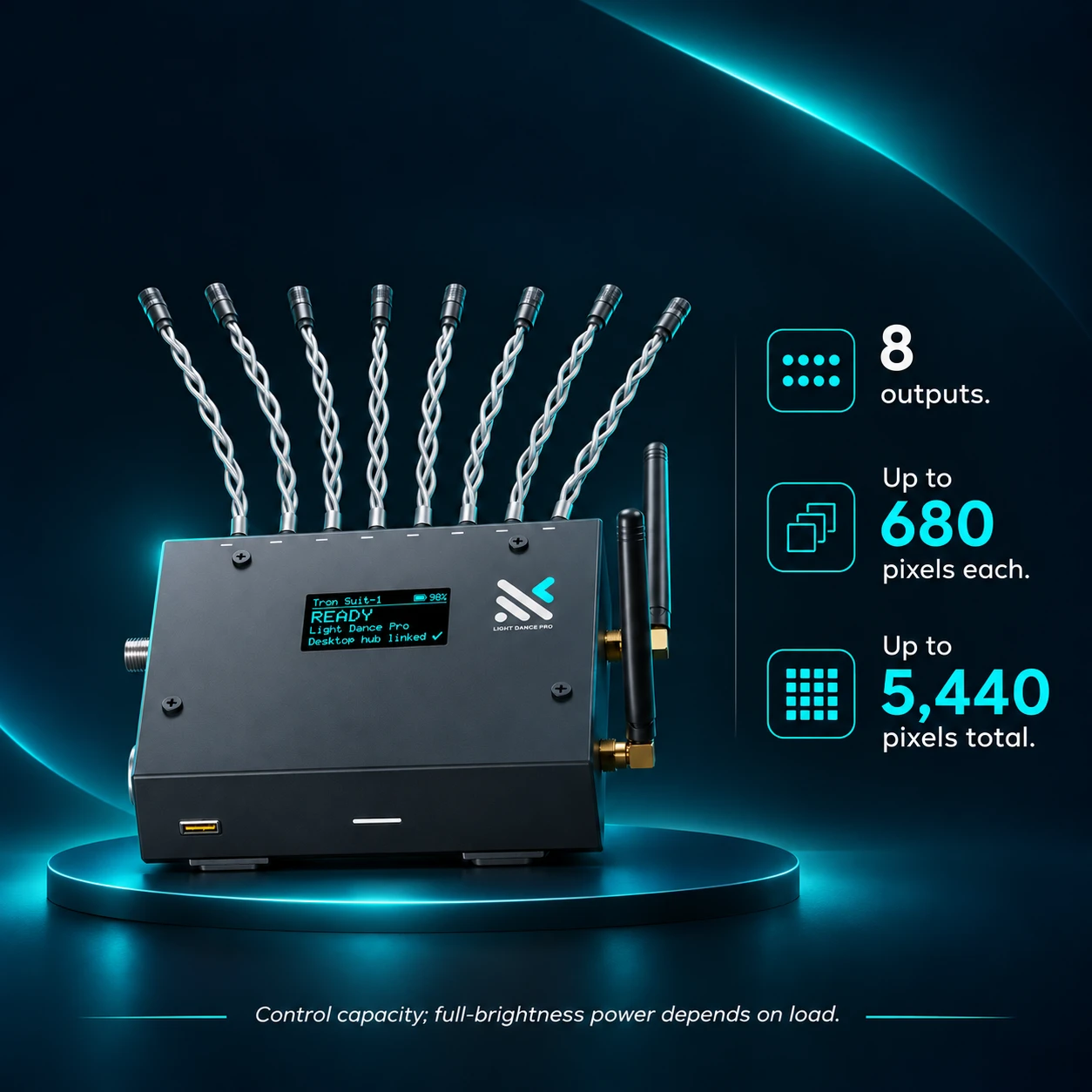
Up to 680 pixels per output
Each Node has 8 outputs and can control up to 5,440 pixels in total. Available power determines how many pixels can run at full brightness.
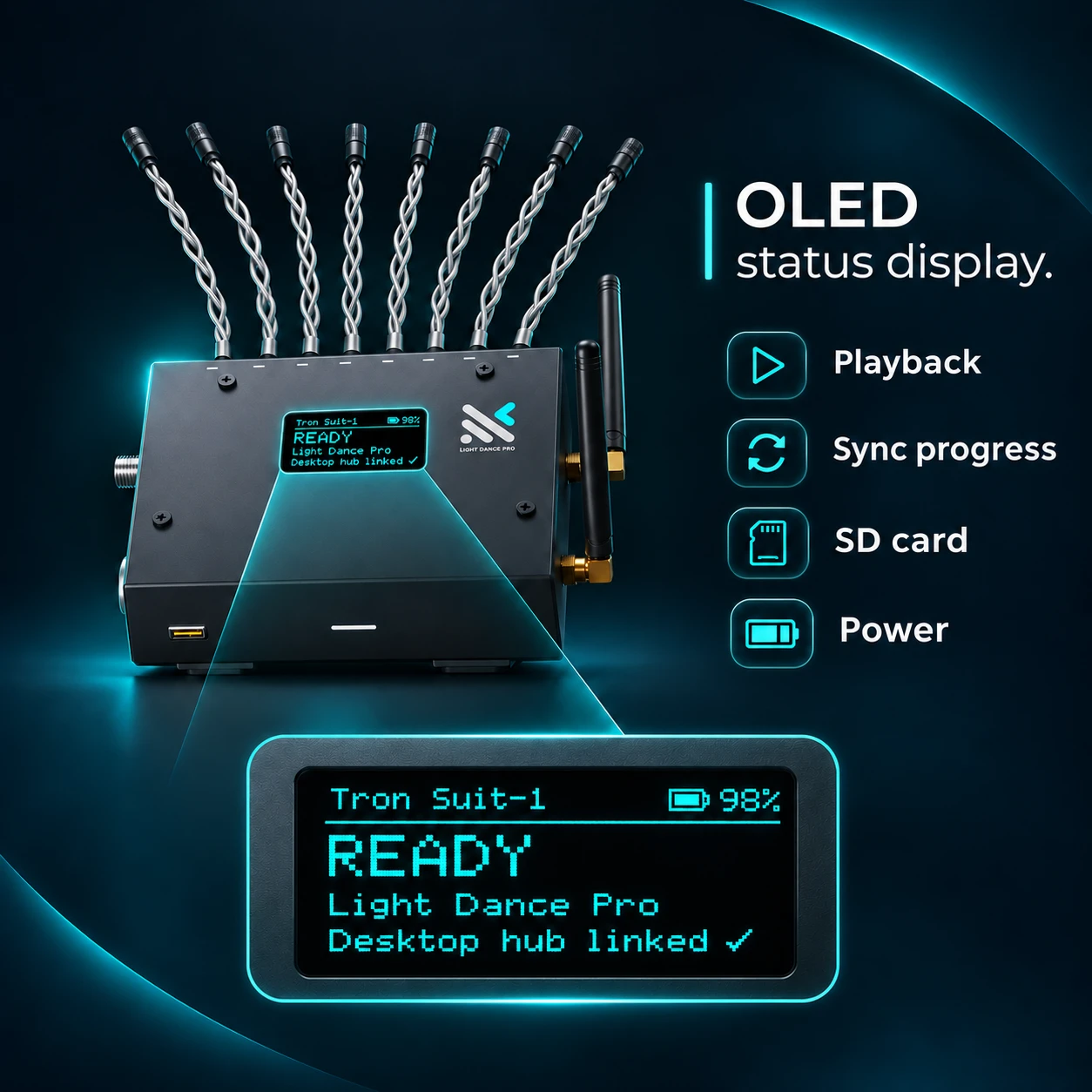
OLED status display
Check playback, sync progress, SD card status and power status on the Node’s screen. The image shows an example display.
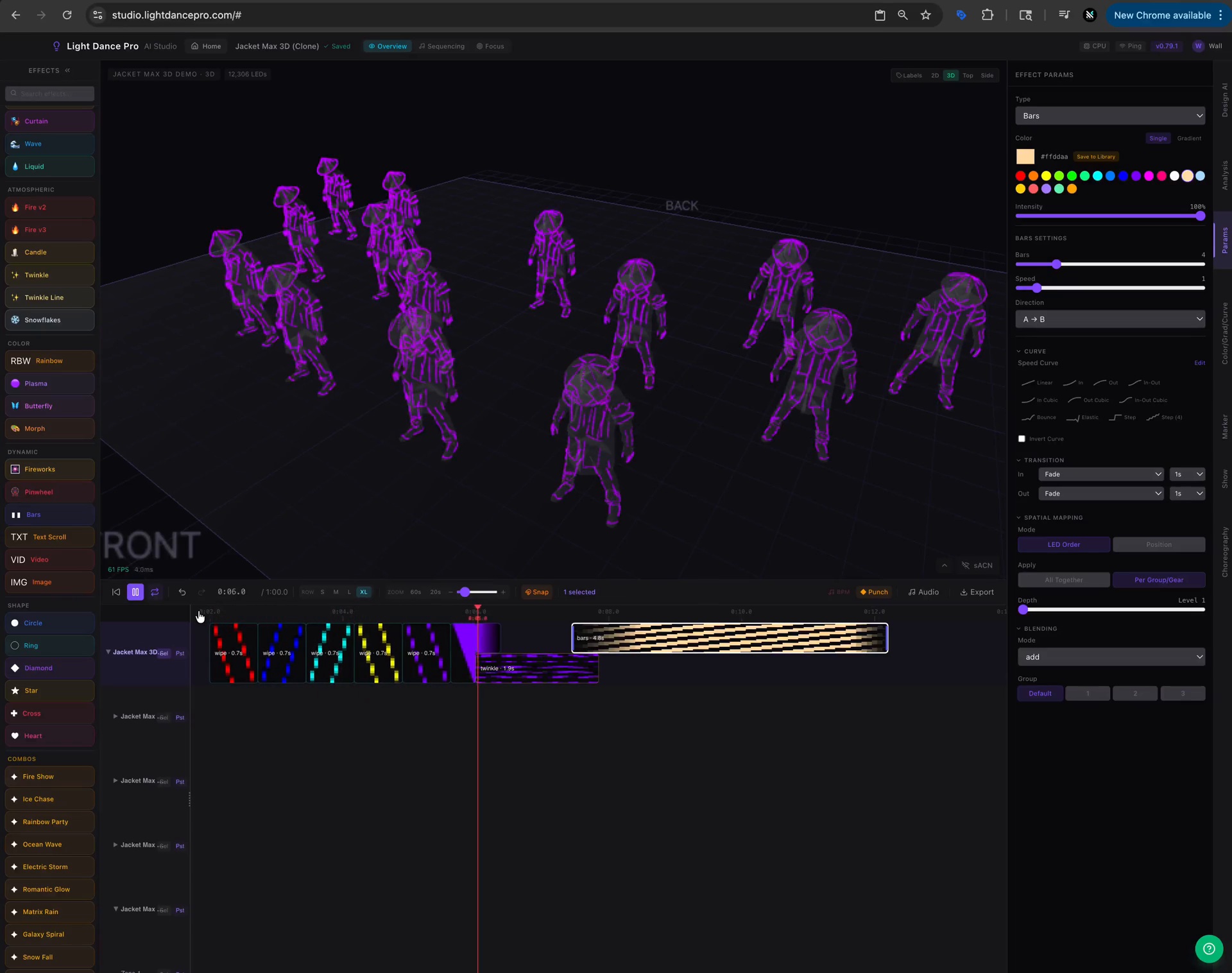
From Studio to stage
Design and preview your show in LDP Studio. Prepare and sync the files in Desktop Hub. Each playback Node stores its files on microSD and plays them locally.
Open StudioPower and mounting
A locking 12 V battery input feeds a DC-DC converter for regulated 5 V LED output. Short-term output reaches up to 15 A. Heat limits continuous output.
Replaceable three-wire braided cables allow slack for pulls and bends. Rear fittings and Velcro secure the Node to clothing or a belt. A connected computer supports USB controller mode and remote diagnostics.
Planned configurations and delivery
Each setup uses one transmitter. The solo configuration pairs it with one receiver (2 Nodes total), the team configuration with five (6 total), and the production configuration with eleven (12 total).
First-batch Node production and dispatch are tentatively targeted for February 2027. LED products require 30–45 days of production. Orders containing both ship together once the Node and the associated products are ready.